Most home cooks treat steam as a binary concept—on or off. But the truth is, the temperature of your steam, the humidity levels in your oven cavity, and even the size of water droplets can profoundly affect your results. We break down the science behind perfect steaming.
The Physics of Steam: More Than Hot Water Vapor
When water reaches 100°C (212°F) at sea level, it transitions from liquid to vapor—a phase change that absorbs enormous amounts of energy. But not all steam is created equal. The way steam interacts with food depends on three key variables:
Steam temperature is the most misunderstood variable. While boiling water produces steam at 100°C, the steam itself can actually be hotter depending on the heating method. In a conventional stovetop steamer, steam loses heat rapidly as it rises through cool air. In a sealed steam oven, the steam maintains its temperature throughout the cavity, creating a stable, uniform cooking environment.
Humidity saturation is the measure of how much moisture the air can hold. At 100% relative humidity, the air is saturated and cannot absorb any more water. This is the state your steam oven reaches during a steam cooking cycle. But here's the nuance: slightly less than 100% humidity actually promotes better browning and crust formation because the slightly drier surface allows for Maillard reactions to occur.
Droplet size matters more than most people realize. Fine mist from a pressurized system behaves differently than large droplets from a traditional steamer basket. Smaller droplets evaporate faster and transfer heat more efficiently, while larger droplets can create uneven cooking by pooling in certain areas.
Why Steam Oven Steam Is Different
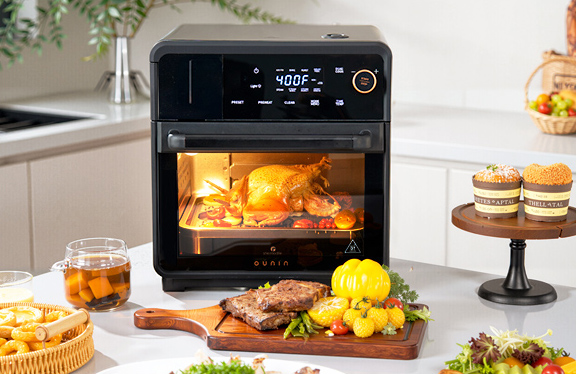
Ounin steam ovens generate steam using a dedicated heating element that boils water in a sealed chamber, then circulates the steam throughout the oven cavity using a convection fan. This is fundamentally different from the steam that rises from a pot of boiling water on your stovetop.
In a stovetop steamer, steam cools rapidly as it rises, meaning food at the top of the basket cooks differently than food at the bottom. The temperature gradient can be as much as 15-20°C (27-36°F) from bottom to top. Your steam oven eliminates this problem entirely by maintaining a uniform temperature throughout the cooking chamber.
The sealed environment also means humidity stays consistent. Every time you open a stovetop steamer to check on your food, you lose steam and let cold air in. Your steam oven door creates an airtight seal that maintains humidity levels throughout the entire cooking process.
Understanding Steam Modes and When to Use Each
Modern steam ovens typically offer multiple steam-related modes. Here's when to use each:
Pure Steam Mode (100°F - 230°F / 40°C - 110°C): Ideal for delicate proteins like fish and eggs, vegetables that you want to keep vibrant and crisp-tender, and proofing bread dough. The high humidity prevents surface drying and allows food to cook gently.
Combination Mode (210°F - 450°F / 100°C - 230°C): Blends steam with conventional heat. This is your go-to mode for roasting chicken (steam keeps the meat moist while the dry heat crisps the skin), baking bread (steam early in baking for oven spring, then vent to dry the crust), and reheating leftovers (steam prevents them from drying out).
Convection Mode: Turns off steam generation entirely. Use this when you want conventional dry-heat cooking—roasting peanuts, dehydrating herbs, or baking cookies that you want to stay crisp rather than chewy.
The Browning Question: Why Steam-Oven-Roasted Chicken Looks Different
One of the most common questions we get is why chicken roasted in a steam oven has paler skin than chicken roasted in a conventional oven. The answer lies in moisture availability during the browning process.
Maillard reactions—the chemical process responsible for browning and complex flavors—require a dry surface to occur efficiently. In a conventional oven, the surface of the chicken dries out quickly, allowing browning to begin within minutes. In a steam oven, the humid air keeps the surface moist longer, delaying browning.
The solution is a two-stage approach: start in pure steam mode to cook the chicken evenly and retain moisture, then switch to combination or convection mode for the final 15-20 minutes to dry the surface and develop a golden-brown crust. This technique, borrowed from professional kitchens, produces chicken that is both perfectly cooked and beautifully browned.
Practical Tips for Temperature Management
Preheating: Always preheat your steam oven in the mode you intend to cook in. Preheating in steam mode means the oven cavity is already humid when you put your food in, preventing the initial temperature drop that occurs when you introduce room-temperature food into a hot, dry cavity.
Water Quality: Use filtered water in your steam oven's reservoir. Tap water contains minerals that can affect steam generation efficiency and leave residue on your oven's heating elements over time. If you live in an area with very hard water, consider using distilled water.
Reservoir Capacity: Ounin ovens provide up to 90 minutes of continuous steam. For longer cooking tasks, plan to refill the reservoir midway through. Opening the oven to refill will drop the cavity temperature and humidity, so plan accordingly for recipes where precise timing matters.
Starting Cold vs. Preheated: Some recipes benefit from starting with food in an unheated oven. For bread baking, many bakers prefer to start the steam oven cold, put the dough in, then start the steam cycle. This gives the dough more time to develop steam absorption during the initial rise phase.
Conclusion
Understanding steam is the difference between good results and exceptional ones. Your steam oven is a precision instrument, and like any precision tool, it rewards those who take the time to understand how it works. The next time you steam a fill of salmon or proof a batch of baguettes, pay attention to what's happening at each stage. Soon, you'll develop an intuition for how steam temperature, humidity, and timing interact to create the results you want.
The best part? Steam ovens are forgiving. Unlike a conventional oven where a 25°F overcorrection can ruin a cake, the humid environment of a steam oven buffers temperature variations and gives you more leeway to learn through experimentation. So start cooking, take notes, and refine your technique with each batch.