The two-stage approach—starting in steam mode for even, gentle cooking, then finishing with high heat for a burnished, crispy skin—is a technique borrowed from professional kitchens. Now it's available in your countertop oven.
The Problem with Traditional Roasting
A perfect roast chicken has two qualities: meat that's cooked through but still juicy, and skin that's golden, crackling, and well-browned. These goals are in tension with each other. Achieving both requires understanding how chicken cooks and how skin browns.
When you put a chicken in a hot conventional oven, the dry heat immediately begins to dry out the surface and set the skin. This prevents browning from progressing evenly and can cause the breast to overcook before the thighs reach temperature. The result is dry breast meat, undercooked thighs, and inconsistent skin.
Professional roast chicken uses a technique called "steam roasting" or "hybrid roasting" that addresses this problem. The oven starts at a lower temperature with steam injection, cooking the chicken gently and evenly. Then, in the final 15-20 minutes, the temperature is cranked up and the steam is turned off to dry the skin and develop the color and texture you want.
The Steam Oven Solution
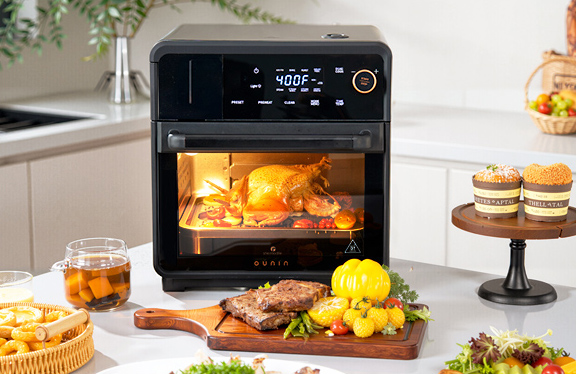
Your Ounin steam oven makes this professional technique accessible at home. The combination mode lets you run steam and dry heat simultaneously, while the precise temperature control lets you switch between modes at exactly the right moment.
Here's why this works so well: during the steam phase, the humid air keeps the skin pliable and allows the interior to cook without the surface drying and tightening. The moisture also conducts heat more efficiently than dry air, meaning the chicken cooks faster and more evenly. There's no hot spots, no uneven browning, no dried-out breast.
When you switch to convection mode for the finish, the skin—still tender and pliable from the steam phase—hasn't yet developed a crust. The dry heat and high temperature then work on a receptive surface, creating the Maillard reactions that produce golden-brown color and crispy texture. The contrast between the moist interior and the crackling exterior is what separates a good roast chicken from a great one.
Our Master Recipe
Ingredients:
- 1 whole chicken (3.5-4.5 lbs / 1.5-2 kg)
- 2 tbsp neutral oil (grapeseed or avocado)
- 1 tbsp kosher salt
- 1 tsp freshly ground black pepper
- 1 lemon, halved
- 4 cloves garlic
- 4 sprigs fresh thyme
- 2 sprigs fresh rosemary
Preparation (Day Before or 2 Hours Before): Remove the chicken from the refrigerator 1-2 hours before cooking to bring it to room temperature. This ensures more even cooking. Pat the skin completely dry with paper towels—moisture on the surface will steam rather than brown. Season generously inside and out with salt and pepper. Stuff the cavity with the lemon halves, garlic, thyme, and rosemary. Tie the legs together with kitchen twine and tuck the wing tips under the back.
Phase 1: Steam Roasting (35 minutes): Preheat the steam oven to 300°F (150°C) in combination/convection steam mode. Place the chicken breast-side up in a roasting pan or on a rack. Insert a probe thermometer into the thickest part of the thigh, being careful not to touch the bone. Roast for 35 minutes. The skin will be pale and somewhat flabby at this point—this is correct.
Phase 2: High Heat Finish (20-25 minutes): Switch the oven to 425°F (220°C) convection mode (steam off). Continue roasting for 20-25 minutes until the skin is deep golden brown and crackling crisp. The thigh should reach 165°F (74°C) on the thermometer. If the skin is browning too quickly before the interior reaches temperature, tent loosely with foil and continue.
Resting (10-15 minutes): Remove the chicken from the oven and tent loosely with foil. Rest for at least 10 minutes—this is non-negotiable. The juices, which have been driven to the center by the cooking heat, redistribute throughout the meat during resting. Cutting too early releases these juices onto the cutting board rather than into the meat.
Troubleshooting
Skin isn't crisping in Phase 2: The oven may not be hot enough, or the steam didn't fully evaporate. Make sure you switch to pure convection mode rather than combination mode for the finish. Also ensure the chicken skin was thoroughly dry before cooking.
Breast is overcooked: The switch from steam to convection came too late. Start checking the thermometer at 30 minutes of steam roasting. The goal is to remove the chicken from steam phase when the breast hits 145°F (63°C)—it will continue cooking during the rest.
Uneven browning: The oven may have hot spots. Rotate the chicken 180° halfway through the convection finish phase.
Variations
Asian-Style Steam-Roasted Chicken: Season with a mixture of five-spice, ginger, and scallions. Baste with a mixture of soy sauce, honey, and sesame oil during the convection finish for a lacquered effect.
Herb Butter Chicken: Slide softened herb butter (compound butter with thyme, rosemary, and garlic) under the skin before cooking. The steam helps the butter infuse into the breast meat while basting from within.
Spatchcock Method: Remove the backbone and flatten the chicken before cooking. This cuts the total time in half and ensures more even cooking. Reduce steam phase to 20 minutes and convection finish to 15 minutes.
The Takeaway
Steam first, sear second—this two-stage approach is the key technique that separates professional-quality roast chicken from what most home cooks achieve. The steam oven makes this approach foolproof by maintaining perfect, consistent steam throughout the first phase and delivering the high heat needed for the second. Once you try this method, you'll never go back to conventional roasting.