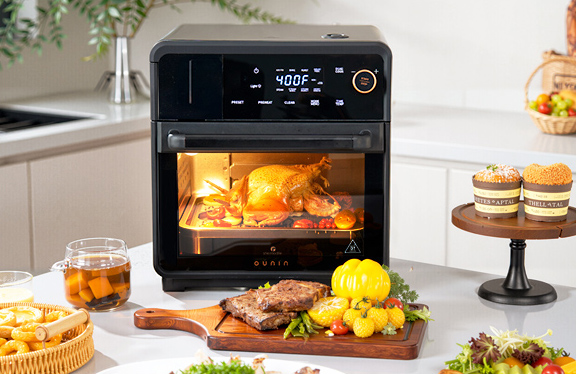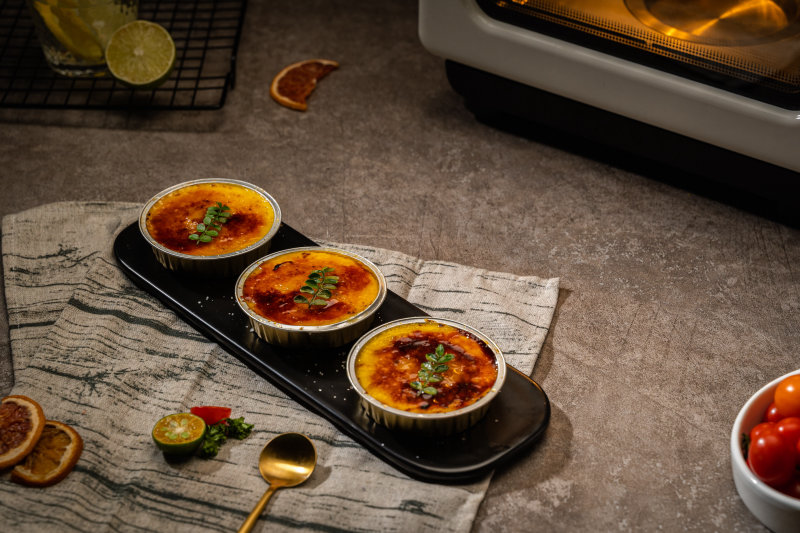
Professional bakers have long known that steam is the key to a crackling crust and an open, airy crumb. With a steam oven, you can achieve professional results in your own kitchen—no professional equipment required.
Why Professional Bakers Use Steam
Walk into any serious bakery and you'll find steam injection systems built into their ovens. This isn't a luxury—it's a necessity for producing the bread that makes people line up before dawn. Steam serves three critical functions during the baking process:
Surface flexibility: In the first 10-15 minutes of baking, bread dough is still soft and extensible. Steam keeps the surface moist and pliable, allowing it to expand freely without the crust cracking. This "oven spring" period is when bread achieves most of its final rise.
Starch gelatinization: Steam condenses onto the surface of the dough and is absorbed by the starch granules on the crust. This gelatinization creates a shiny, lacquered finish that later develops into a beautiful golden color. Without steam, the crust forms too quickly and becomes dull and hard rather than crisp and shiny.
Crust development: After the steam evaporates and the crust begins to dry, it undergoes the Maillard reaction and caramelization at lower temperatures than it would in dry air. This produces the complex, nutty flavors and deep amber color that distinguish artisan bread from home-baked attempts.
The Home Oven Problem
Traditional home ovens are designed for efficiency and safety, not bread baking. They preheat quickly, vent minimal air, and operate in dry heat mode. When you bake bread in a conventional oven, several things go wrong:
The dry air causes the crust to form almost immediately, before the bread has finished rising. This creates a domed, cracked crust with a tight, dense crumb. The lack of humidity also means the crust doesn't develop properly—it may brown on the outside but remains pale and underwhelming. And because conventional ovens don't hold heat as stably as professional deck ovens, you get uneven baking with hot spots that can burn the bottom of your loaf.
Home bakers have tried various workarounds: baking in a Dutch oven (which traps steam from the dough), placing a pan of water in the oven, or using a baking stone to retain heat. These techniques work, but they're cumbersome and inconsistent. A steam oven solves all of these problems elegantly.
The Steam Oven Advantage
Your Ounin steam oven generates steam continuously throughout the initial baking phase, maintaining 100% relative humidity in the oven cavity. This creates the same conditions as a professional bakery's steam-injected deck oven. The difference is remarkable:
Oven spring: Your bread will rise 20-30% more than it would in a dry oven. The moist surface allows the crust to stretch as the interior expands, resulting in a taller, more open crumb structure.
Crust quality: The steam-induced gelatinization creates a glossy, professional-looking crust with complex flavor development. This isn't possible to achieve in a conventional home oven.
Consistency: Unlike Dutch oven baking (where results vary based on how much steam escapes when you open the lid), a steam oven maintains perfect conditions throughout the entire baking cycle. Every loaf comes out identical to the last.
Capacity: Unlike a Dutch oven, which limits you to one small round loaf, your steam oven accommodates multiple loaves, baguettes, or rolls in a single batch.
Our Master Recipe: Country Boule
This recipe produces a 900g loaf with a crackling crust and an open, creamy crumb. We use a combination of bread flour and whole wheat for flavor complexity, with a small amount of levain (natural starter) for depth of flavor. The process takes about 24 hours from start to finish, but active work time is only about 30 minutes.
Ingredients:
- 400g bread flour
- 100g whole wheat flour
- 375g water (75% hydration)
- 100g active levain (100% hydration)
- 10g fine sea salt
Day 1, Evening: Mix flours and water, let rest 1 hour (autolyse). Add levain and salt, mix thoroughly. Perform 4 sets of stretch and folds over 2 hours. Shape into a ball, place in a floured banneton, cover. Refrigerate overnight (10-16 hours).
Day 2, Morning: Remove dough from refrigerator. Preheat steam oven to 450°F (230°C) in convection steam mode. Score the top of the dough with a sharp blade. Bake for 20 minutes with steam, then vent the oven (open the door slightly or use the vent function) and continue baking for 25-30 minutes until deep golden brown and internal temperature reaches 205°F (96°C).
Cooling: Transfer to a wire rack and cool for at least 2 hours before slicing. The internal crumb is still setting as the bread cools—cutting too early results in gummy texture.
Troubleshooting Common Bread Problems
Dense, heavy crumb: This usually indicates under-proofing. Your dough needs more time at room temperature before baking. A properly fermented dough should feel airy and spring back slowly when poked.
Cracked, domed crust: The oven was too dry or the dough was over-proofed. Use steam mode throughout the initial baking phase and check that your levain is active but not past its peak.
Pale, soft crust: Not enough steam or baking temperature too low. Ensure steam is running throughout the first 20 minutes and that the oven is fully preheated.
Gummy interior: The bread wasn't baked long enough or wasn't cooled properly. Always check internal temperature and allow at least 2 hours of cooling.
Expanding Your Repertoire
Once you've mastered the basic boule, you can apply these same principles to dozens of other breads. Ciabatta benefits enormously from steam—the high hydration dough needs the support of humid air to rise freely without spreading. Baguettes develop their characteristic ear (the lifted flap of crust at each score mark) only when steam keeps the surface pliable during oven spring. Even enriched doughs like brioche bake better in a steam oven, where the moisture helps develop a softer, more tender crust.
The key is to experiment with timing and steam levels. Every oven behaves slightly differently, and your ideal settings may vary by a few degrees or minutes from ours. Keep notes, take photos of your crumb structure, and adjust systematically. Within a few batches, you'll develop an intuition for what works in your specific oven.
Making bread at home isn't just about the final product—it's about the ritual. The tactile pleasure of mixing dough, the anticipation of watching it rise, the satisfaction of a perfect bake. With a steam oven, you're not just making bread. You're joining a tradition that stretches back ten thousand years, carrying it forward in your own kitchen.